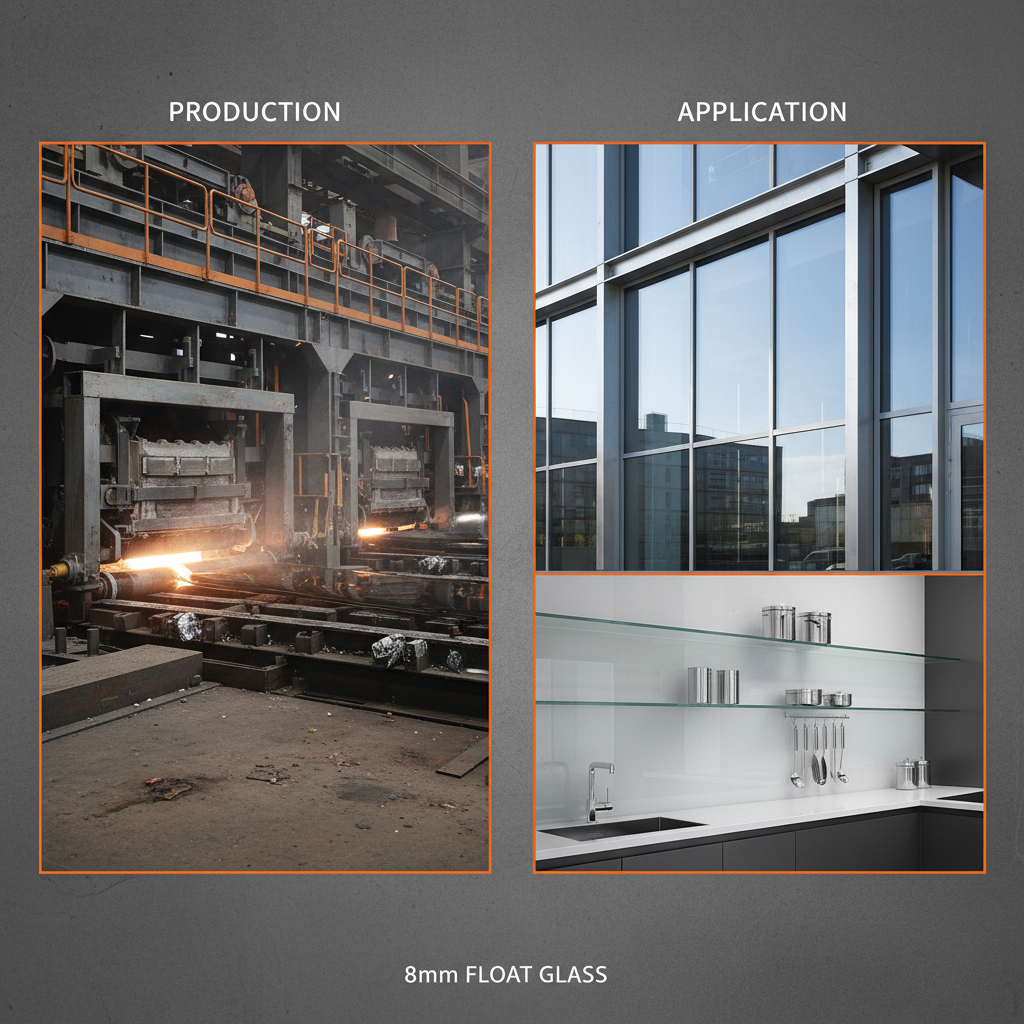
The global architectural landscape has been fundamentally transformed by the availability of high-quality flat glass, making the search for premium glass floats for sale a priority for modern developers and designers. This specialized material provides the essential foundation for everything from towering skyscrapers to minimalist interior partitions, offering a level of clarity and structural integrity that was previously unattainable. Understanding the nuances of this material is key to optimizing light transmission and energy efficiency in any building project.
In the competitive realm of construction materials, the demand for consistent thickness and optical purity has pushed the industry toward advanced float glass production. This process, which involves floating molten glass on a bed of molten tin, eliminates the distortions common in older manufacturing methods. As industries shift toward sustainable and high-performance materials, the technical specifications of the glass used in facades and furniture have become critical benchmarks for quality and safety.
Whether you are sourcing for a high-end commercial complex or a precision electronics facility, finding reliable glass floats for sale ensures that your project benefits from superior flatness and transparency. By utilizing the float method, manufacturers can provide a product that is not only aesthetically pleasing but also highly durable and easy to process for further enhancements like tempering or acid etching.
Definition and Characteristics of Float Glass
Float glass is a specialized type of flat glass produced by floating molten glass on a bed of relatively dense molten tin. This unique interaction, governed by gravity and surface tension, allows the glass to spread evenly, resulting in a product with an exceptionally smooth, hard, and flat surface on both the upper and lower sides. Unlike traditional glass, float glass exhibits remarkable uniformity in thickness, which prevents visual distortion and ensures a clear, white appearance when viewed from the side.
The primary characteristic that makes these products highly sought after in the market for glass floats for sale is their superior transparency. Because the surface is so precise, the field of view is broad and undistorted, making it the ideal substrate for further processing. This combination of hardness and optical purity allows it to be used in a diverse range of applications, from simple window panes to complex architectural curtain walls.
The Advanced Float Glass Production Process
The production cycle begins with the melting of raw materials at extreme temperatures within a furnace. The molten glass then flows continuously from the furnace onto the surface of a tin bath, where protective gases such as Nitrogen (N2) and Hydrogen (H2) are introduced to prevent oxidation and ensure the purity of the glass ribbon. As the glass spreads across the tin liquid, it naturally flattens, cooling and hardening into a precise ribbon of glass.
Once the ribbon has reached the appropriate consistency, it is transferred to a transition roller table. These rollers pull the glass from the tin bath and lead it into an annealing kiln. Annealing is a critical step; it involves a controlled cooling process that relieves internal stresses within the glass, ensuring that the final product is stable, durable, and resistant to spontaneous breakage. After this thermal treatment, the glass is cut to specific dimensions.
Compared to other forming methods, the float process is highly efficient and scalable. It allows for the mass production of high-quality flat glass without the corrugations found in rolled glass. Furthermore, the process is conducive to full-line mechanization and automation, which significantly reduces labor costs and energy consumption per unit, while maintaining a stable production cycle that can last for several years.
Global Applications and Use Cases
Float glass is utilized across a vast array of industries due to its versatility. It is commonly divided into categories such as tinted glass, float silver mirrors, and ultra-white float glass. In the high-end construction sector, those looking for glass floats for sale often prioritize ultra-white variants for use in solar photovoltaic curtain walls and luxury building facades where maximum light transmission is required.
Beyond architecture, the material is indispensable in the precision electronics and lighting industries. Its high purity and brightness make it the best choice for imitation crystal products and decorative glass furniture. In remote industrial zones or special government buildings, the strength and optical properties of float glass provide both security and a sophisticated aesthetic, ensuring that indoor light remains bright and natural.
The application extends to the automotive industry and information technology, where the need for flat, non-distorting surfaces is paramount. By undergoing additional treatments like flame polishing or tin surface treatment, the glass achieves an even neater surface. This makes the search for high-grade glass floats for sale essential for manufacturers of high-end display screens and automotive windshields.
Core Advantages and Long-Term Value
The value proposition of float glass lies in its inherent physical properties. First, it offers unmatched flatness, completely eliminating the "water ripple" effect seen in inferior glass. Because the raw materials utilize high-quality selected ore quartz sand, the resulting glass is pure, compact, and heavy. This density makes the material easier to cut and less prone to breaking during installation compared to other flat glass types.
From a long-term investment perspective, float glass provides significant cost-efficiency and sustainability. Its ability to be integrated into energy-efficient building designs—such as reflective or spray-film glass—reduces heating and cooling costs for building owners. The reliability and durability of the material ensure a long lifespan, reducing the frequency of replacements and enhancing the overall safety and dignity of the architectural space.
Performance Comparison of Glass Floats for Sale
History and Technical Evolution
The float glass revolution began in the late 1950s when the British Pilkington Glass Company successfully developed the float forming process. This was a monumental shift from the previous grooved top forming methods, which were labor-intensive and often produced glass with inconsistent thickness. This innovation set the global standard for flat glass production, paving the way for the modern skyscrapers we see today.
In China, the journey toward mastering this technology was one of self-reliance and innovation. In May 1971, industrial trials began in Luobo, culminating in the successful production of the country's first float glass on September 23, 1971. Over the next decade, continuous technical transformations increased melting capacities to 225 tons and expanded plate widths to over 2 meters, drastically improving the overall yield and quality of the product.
Future Trends in Architectural Glass
The future of the glass industry is leaning heavily toward "smart" and "green" integration. We are seeing a rise in the production of electric float reflective glass and spray-film glass produced during the annealing process. These innovations allow buildings to manage solar heat gain more effectively, aligning with global sustainability goals and reducing the carbon footprint of urban environments.
Automation and digitalization are also transforming how these materials are manufactured. Full-line mechanization now allows for tighter tolerances in thickness and purity, meaning that those searching for glass floats for sale can expect even higher levels of consistency. The integration of IoT in production lines ensures that every ribbon of glass is monitored for quality in real-time.
Furthermore, the development of ultra-thin float glass (down to 1.2mm) is opening new doors in the electronics sector. From foldable screens to lightweight aerospace components, the evolution of the float process continues to push the boundaries of what is possible, combining aesthetic brilliance with extreme functional utility.
Technical Specifications and Dimensions
Choosing the right glass requires a deep understanding of available thicknesses and sizes to ensure structural safety and design accuracy. Float glass is available in a broad spectrum of thicknesses, ranging from ultra-thin options for electronics to extra-thick slabs for heavy-duty industrial use. This versatility is what makes the global market for glass floats for sale so dynamic.
Regular thicknesses typically include 3mm, 4mm, 6mm, and up to 12mm, which cover most residential and commercial needs. For specialized applications, ultra-thin glass (1.2mm to 2.5mm) and extra-thick options (15mm to 19mm) are produced. These variations allow architects to balance weight and strength according to the specific requirements of the project.
The dimensions are equally varied to minimize waste during the cutting process. Standard sizes range from compact 9151220mm sheets to massive 24403660mm panels. By providing a wide array of pre-set sizes, manufacturers ensure that the material can be integrated into any framework with minimal adjustment.
Technical Specifications for High-Quality Float Glass
|
Thickness Category
|
Available Range (mm)
|
Common Application
|
Optical Clarity Score (1-10)
|
| Ultra-Thin |
1.2mm - 2.5mm |
Electronics / Displays |
9 |
| Regular |
3mm - 12mm |
Windows / Doors |
8 |
| Extra-Thick |
15mm - 19mm |
Industrial Partitions |
7 |
| Ultra-White |
Various |
Solar / Luxury Facades |
10 |
| Tinted |
Various |
Sun Protection / Privacy |
6 |
| Silver Mirror |
Various |
Interior Decoration |
9 |
FAQS
The primary difference lies in the production method. Float glass is made by floating molten glass on molten tin, which results in a perfectly smooth, flat surface without the distortions or corrugations found in ordinary rolled or drawn flat glass. This leads to superior optical clarity and thickness uniformity, making it the gold standard for modern architecture.
While float glass is very strong and compact, it is typically used as a substrate. For load-bearing or high-safety areas, float glass is further processed into tempered or laminated glass. This increases its strength and ensures that if it does break, it does so in a safe manner. Always consult a structural engineer for load-bearing specifications.
Ultra-white float glass has significantly lower iron content, which removes the greenish tint seen on the edges of standard clear glass. This results in maximum light transmission and higher color accuracy, making it ideal for high-end furniture, precision electronics, and solar photovoltaic curtain walls.
Annealing involves cooling the glass ribbon at a controlled rate in a specialized kiln. This process removes internal stresses that occur during the rapid cooling phase. Without annealing, the glass would be unstable and highly susceptible to spontaneous cracking during cutting or installation.
Yes, especially ultra-white float glass. Its exceptional transparency and flatness ensure that maximum sunlight reaches the photovoltaic cells. Additionally, its resistance to environmental weathering makes it a durable choice for solar panel cover glass in various climates.
Float glass is available in many standard sizes to fit different needs, such as 12201830mm, 21403300mm, and up to 24403660mm. These sizes are designed to maximize material utilization and can be custom-cut to meet the specific architectural requirements of your project.
Conclusion
Float glass represents a pinnacle of industrial achievement in the non-metallic mineral products sector, combining chemical purity with physical precision. From its revolutionary beginnings at Pilkington to the highly automated production lines of today, it has provided the world with a material that offers unmatched transparency, flatness, and versatility. By understanding the technical specifications—from ultra-thin electronics glass to extra-thick architectural slabs—developers can make informed decisions that enhance both the beauty and the efficiency of their structures.
Looking forward, the integration of sustainable coatings and smart-glass technologies will continue to expand the utility of float glass. Whether you are seeking materials for a green building project or high-precision industrial components, prioritizing quality and technical adherence is essential. We invite you to explore the highest standards of glass manufacturing to ensure your next project is built on a foundation of clarity and strength. Visit our website: www.shzrglass.com